


Hard Lessons Of Helping Build a $3.6 Billion Company

The Belief, the Blind Spot and the Blast Off
There is someone out there who needs to hear this. There is somebody who’s working overtime, putting in extra hours, giving ideas for free, and building someone else's dream while quietly setting aside pieces of their own. You're the first to volunteer, the last to leave, and the one who gives more than anyone asks because you believe in a mission and in a person. You assume that if you work hard enough, contribute enough ideas, and remain loyal through the difficult seasons, your efforts will one day be remembered and pay off.
If that is you, then it is my hope that this story and my lessons will help you see things that may be in your blind spot and are taking precious time away from investing in yourself and putting your creative energy and work into things that will pay off in the end.

Over the past decade, I've learned that businesses are built with far more than capital. They are built on belief long before there is proof. They are built on ideas that others don't yet see, on sacrifices that rarely make headlines, and on relationships that are either strengthened or weakened by the choices leaders make every day.
I've also learned that you can't want something for someone more than they want it for themselves. Passion is a remarkable gift, but it must be matched by wisdom. Belief without boundaries can become sacrifice without recognition, and eventually, disappointment.
This isn't simply the story of one company or one relationship. It's a story about leadership, stewardship, trust, and legacy. It's about what happens when people believe in something enough to give it their very best, and what leaders choose to do with those gifts once success finally arrives.
These are the lessons I learned from helping build a $3.6 billion company and the beliefs, the blind spots and the blastoff that left me wondering how I got left behind after launch.
Lesson 1: Every Great Company Begins With Someone Who Believes Before Everyone Else
One of the greatest misconceptions about entrepreneurship is that great companies are built solely by their founders. They are not. Every successful company is built by an ecosystem of people who believe long before success is guaranteed. Some of those people invest capital, but many invest something even more valuable. They invest their time, creativity, experience, reputation, and belief in an idea that has yet to prove itself. Long before there are headlines, billion-dollar valuations, or acquisition announcements, there are individuals quietly working behind the scenes because they see potential that others cannot yet see.
I experienced that firsthand more than a decade ago. In 2012, I made plans to meet up with Zachary Bookman, a graduate of Harvard and Yale, and a former personal friend. We decided to have a beer at P.J. Clarke's in New York City after he returned from serving on General H.R. McMaster's anti-corruption task force in Afghanistan. During dinner, he shared that he was beginning work on a government technology startup. He couldn't reveal many details, but he spoke about the opportunity with unmistakable enthusiasm and confidence. He told me he believed it was going to be big. At that moment, there was little tangible evidence that it would become anything extraordinary. OpenGov was still in its infancy, with no proven track record and no certainty that it would succeed. Yet I believed in Zac, and I believed that if the company succeeded, it had the potential to make a meaningful impact on how local governments served their communities.
Over the next three years, I stayed connected with Zac and the company while continuing to work as a producer creating national commercials for the brands of Jeep, Dodge and Ram Trucks. I periodically checked in, reviewed their marketing efforts, and offered ideas whenever I saw opportunities to strengthen their storytelling. My background had taught me that the most successful brands are rarely built by explaining services. They are built by helping people understand why those services matter. I believed OpenGov had a compelling mission, but I also believed its story had yet to be told in a way that would emotionally connect with people.
In 2015, an opportunity finally presented itself. Rather than waiting for a formal contract or a significant budget, I offered to help demonstrate what the company could become through professional storytelling. I created OpenGov's first video samples on a pro bono basis and ultimately produced approximately fifteen pieces at no charge. I did not make that decision because I expected equity, ownership, or special recognition. I made it because I believed in the mission, believed in Zac and the people leading it, and believed that investing my talents early would help establish a stronger foundation for the company's future.

Looking back, I realize those videos were never truly free. They represented an investment every bit as real as writing a financial check. I invested years of experience, thousands of dollars in creative services, relationships I had built throughout my career, and countless hours that could have been spent on paying clients. I made those investments willingly because I believed I was helping build something meaningful. Like many entrepreneurs and creatives, I assumed that if I consistently delivered value, the relationships would naturally grow stronger, trust would deepen, and fairness would eventually follow.
That experience taught me my first lesson: Every great company begins with someone who believes before everyone else. And leaders who recognize and honor those early believers build more than successful businesses. They build trust, loyalty, and relationships that can last a lifetime.
Lesson 2: Ideas Are More Valuable Than Most People Realize
Ideas are among the most undervalued assets in business. They don't appear on balance sheets, yet they often become the foundation upon which companies build their greatest successes. The right idea can reshape a brand, change public perception, inspire employees, attract customers, and open doors that traditional marketing never could. But ideas have another characteristic that makes them especially fragile: they are easy to overlook, easy to dismiss, and sometimes even easier to forget once they've proven successful.
As my relationship with OpenGov grew, I came to see my role as more than simply producing videos. I became an advocate for the company's story. Every assignment became an opportunity to think beyond what had been requested and ask a different question: "What could this become?" Instead of treating each production as a standalone project, I looked for ways each story could reinforce the larger narrative of the company. I wasn't content to simply complete a task. I wanted to help build a brand.
That mindset led me to consistently bring new ideas to the table. In 2017, at the International City/County Management Association (ICMA) conference, after interviewing Brian Dehner, the city manager of Edgewood, Kentucky, in the hotel lobby, I realized his experience revealed something much bigger than software features or government transparency. His story demonstrated how better budgeting and better government could literally save lives. I proposed shifting OpenGov's messaging away from conventional customer testimonials and internal talking heads toward authentic human stories that connected emotionally with audiences. That concept eventually became "OpenGov Saves Lives," a campaign that resonated internally and externally because it focused on people rather than products.
Over the following seven years, I continued forward with the same passion and ideation. I rarely confined myself to the scope of work described in the company briefs. I routinely brought new ideas and new angles to every project and worked to get the most out of every dollar. Often, I worked beyond the scope of the budget, arriving a day early to scout locations, capturing additional footage, filming breathtaking POVs with my drone, and always doing more than had been requested. That work resulted in increased quality, and that quality reflected positively on the brand, creating a lasting impression. I believed that if I was going to attach my name to a project, it deserved everything I had to offer, and my philosophy resulted in millions of online views and ultimately customer meetings and sales driven by the brand's impression.
In fact, it was that philosophy that eventually led to what would become one of the most significant and controversial ideas for any video production that OpenGov had ever taken on.

It all started with a phone call in early 2018, when Zac reached out to me and shared his longtime dream of bicycling across America. This was a personal goal, and he’d asked me to be his support team, but I immediately recognized something larger than the ride itself. I didn't see a personal adventure. I saw an opportunity to humanize a CEO, tell a uniquely American story and create a video marketing campaign that no competitor could duplicate. Long before the company fully embraced the concept, I envisioned a documentary that would capture the spirit of the company, elevate the commitment of its leaders and connect customers, employees, and communities through the power of storytelling rather than advertising.
Years later, the project would become one of the defining inspirational moments that captured the attention of the Chairman and CEO of Cox Enterprises which ultimately led to the $1.8 billion sale of the majority stake in the company. In the words of Zac,
"It sounds funny but the Chairman & CEO of Cox
referenced OpenGov Across America multiple times,
seems like that stunt had value after all!"
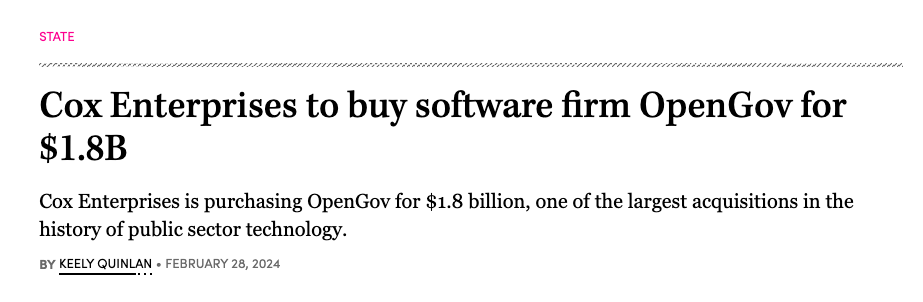
The idea was simple in concept, but turning it into reality would prove to be anything but simple. Between the first conversation in 2018 and the execution of the ride in 2021 there were countless meetings, presentations, revisions, setbacks, and moments when the project could have just as easily been abandoned. Bringing a single idea to life often requires far more persistence than inspiration.
I'll return to that journey in the next lesson because it taught me something equally important about sacrifice. But before we leave this moment, it is important to highlight that ideas have value.
Their value often isn't obvious when they're first introduced. The best ideas frequently challenge conventional thinking, require significant investment, or ask organizations to see possibilities that don't yet exist. That is why creatives, entrepreneurs, and innovators have a responsibility to champion their ideas, communicate their value, and understand what they're truly worth. Great ideas don't simply appear. They are nurtured, refined, defended, and, when given the opportunity, they can transform companies and capture the imagination and belief of Chairmen and CEOs of major corporations in ways no product or functionality can.
That is why ideas should never be treated casually. They deserve to be protected, respected, and properly credited. They are among the most valuable assets any individual or organization possesses, and the leaders who recognize their value create cultures where innovation continues to flourish.
Lesson 3: Sacrifice Creates Opportunity, But It Doesn't Guarantee A Return
It's easy to believe in a company after it becomes successful. It's easy to support an idea after everyone agrees it will work. The true test of commitment comes much earlier, when success is uncertain, resources are limited, and someone has to carry the weight of an idea before anyone knows whether it will succeed.
That was the season I found myself in when OpenGov Across America, the internal name for Zac’s bike ride and video production, became a reality.
After proposing the concept and helping shape its vision, I accepted a role that required far more than simply showing up with a camera. During the production of OpenGov Across America, I spent thirty-seven days on the road over three months while accepting compensation that amounted to less than the daily rate of a production assistant, one of the most junior positions on a professional film crew. Yet the work I performed bore little resemblance to an entry-level role. I served simultaneously as director, producer, cinematographer, production manager, logistics coordinator, public relations representative, travel planner, problem solver, and, at times, simply a trusted companion helping the CEO, Zac, navigate one of the most physically and emotionally demanding experiences of his life.
The work extended far beyond filming. I routinely worked 16-hour days, adjusted production plans and travel when circumstances changed, and looked for opportunities to capture moments that no production schedule could anticipate. I even accepted Zac’s offer to share a hotel room to save funds and compromised valuable privacy, which came at a cost. Every day presented new challenges, and every challenge required someone willing to adapt. I embraced those responsibilities because I believed in the story, and I knew its potential value extended far beyond the work and sacrifice.
As the trip across the country went on, the demands on the team only increased. With the increase in work and stress, arguments occurred, team members broke down, and Zac became emotional at times. Because of this, some people quit, while others in leadership quietly abandoned their support. Rather than allowing the project to lose momentum, I absorbed additional responsibilities to ensure the vision continued moving forward. My commitment was never driven by a contract or a job description. It was driven by a belief that we were creating something unique, something that could elevate both the company and the people behind it. So I remained loyal to my friend and CEO as he worked to complete the goal he'd set out to accomplish.

Looking back, I realize I wasn't sacrificing for a paycheck. I was sacrificing because I believed in an idea before it had proven its worth. I believed in the company's mission. I believed in the power of documentary storytelling. Most of all, I believed that extraordinary opportunities require extraordinary commitment. If something was going to fail, I wanted it to fail because the idea wasn't good enough, not because I hadn't given it everything I had.
In the end, once the project had found success, the company leadership absorbed it as their own. It was a painful reality of business after I'd sacrificed so much. Yet from the experience, I learned a valuable lesson: sacrifice creates opportunity, but it doesn't guarantee a return.
There were many moments when I found myself advocating more passionately for ideas than the leadership valued them. I believed so deeply in the company's potential and in Zac as a person that I often carried the vision beyond the expectation, assuming my commitment and persistence would eventually be enough. Experience taught me otherwise, and I now realize you can't believe in something more than the people you are doing it for.
Passion is a tremendous gift, but it can also become a liability when your investment is measured only in effort while someone else's is measured in ownership. If you don't have equity in the business or your name on the company charter, there comes a point where wisdom requires you to recognize the difference between supporting someone else's vision and carrying a burden that was never yours to bear. If you're going to invest that much into a product, be sure the contract will reward you for it.
Lesson 4: The Deepest Wounds Often Aren't Financial
By this point in my career, I had learned that money comes and goes. Businesses succeed and fail. Contracts begin and eventually end. Those realities are simply part of life. What I wasn't prepared for was discovering that recognition for one's hard work and trust in their loyalty can disappear just as easily.
As OpenGov continued to grow, I began noticing something that was far more painful than any financial disagreement. The story of how impactful ideas came to life began to change. Public recognition became bureaucratic. Ethics were outsourced for efficiency. And respect was traded in for rank.
“I don't believe great companies
are built by one person.
They are built by teams of people
whose talents intersect
at just the right moment”.
Founders deserve enormous credit for taking extraordinary risks, but they are rarely alone. Every successful company has individuals who generate ideas, solve problems, open doors, absorb setbacks, and continue believing when others have doubts. When history forgets those people, something much larger than recognition is lost. The culture itself begins to change.
In my time with OpenGov, one moment has stayed with me more than any other. It came after the bike ride, after the highs and lows of the journey, after the battle to believe in my ideas, and after years of believing we had built something together.
The moment itself wasn't dramatic. There wasn't an argument or a confrontation. It came in the most ordinary way imaginable. After submitting an invoice for $900 for work I'd completed, an internal billing email was inadvertently forwarded to me. Instead of reaching out directly to discuss the proposal, the friend I had stood beside, traveled across the country with, and worked tirelessly to support for nearly a decade responded with a short message:
"I dunno this [invoice] strikes me as cray [crazy]. I suggest we either ignore or have Shirin [executive assistant] reach out...”— Zac
To someone reading that email without context, it may seem insignificant. To me, it represented something much larger. It wasn't simply about the money. It was the realization that somewhere along the way, I had stopped being viewed as a trusted friend and creative partner and had become someone whose concerns could simply be ignored.
That realization hurt far more than any disagreement over money ever could. It marked the moment I understood that trust, once quietly lost, is extraordinarily difficult to recover.

Every leader eventually faces a choice. When success arrives, do you widen the spotlight or narrow it? Do you elevate the people who helped build the organization, or do you allow the narrative to slowly become centered around only a few names? Great leaders understand that giving credit away never diminishes their own accomplishments. In fact, it strengthens them. People willingly follow leaders who are generous with recognition because generosity creates trust.
The lesson remains true: the deepest wounds in business are rarely financial.
The greatest hurt came from giving so much of myself to help build a company alongside people I considered friends, believing that if we succeeded together, there would, at the very least, be a meaningful conversation about my future and gratitude for my contribution.
That conversation never came.
Despite years of investing my ideas, accepting reduced compensation, and helping shape the company's story during its formative years, I was never offered employment, never offered equity, and never invited to share in the long-term success of what I had helped build. Those decisions belonged to the company's leadership, but they also revealed a difficult truth: extraordinary contributions are not always met with extraordinary recognition.
In the end, the deepest loss wasn't financial. It was realizing that belief, sacrifice, and loyalty alone are not enough. They must be accompanied by clear agreements, mutual respect, and leaders who remember the people who helped make success possible.
In Closing: Someone, somewhere needs to hear this.
I began this essay by saying that someone out there needed to hear this. The truth is, I think all of us do.
At some point in our lives, nearly every one of us has invested more of ourselves than we should into a company, a cause, or another person's vision. We've poured ourselves into work because we believed in it. We've freely shared ideas, taken on responsibilities beyond our job descriptions, and convinced ourselves that loyalty, hard work, and sacrifice would eventually be recognized and rewarded.
We've all grown up hearing familiar phrases:
"Hard work pays off."
"You reap what you sow."
"The harder you work, the luckier you get."
"Good things come to those who hustle."
"No pain, no gain."
There's truth in every one of those statements. Hard work does matter. Character matters. Perseverance matters. But experience has taught me that those truths are incomplete. Hard work alone doesn't guarantee recognition. Sacrifice doesn't always lead to appreciation. Loyalty doesn't always protect the people who give it most freely.
Every organization is built on the shoulders of individuals whose names may never appear in headlines, press releases, or annual reports. They are the people who believed before there was proof, championed ideas before they became strategies, and sacrificed long before success was certain.
The strongest leaders never lose sight of those contributions. They recognize people generously, protect relationships intentionally, and understand that gratitude isn't simply good manners. It's one of the foundations of lasting leadership.
If there's one lesson I hope you'll carry with you, it's this: hard work does pay off. Sometimes it pays in opportunity. Sometimes it pays in success. And sometimes its greatest return comes in the form of hard-earned wisdom that shapes every decision you make for the rest of your life.

I read every comment and email, so please share.
Thank you for reading.




Comments